
Serbian Is Worth Learning. Here's Why

Author
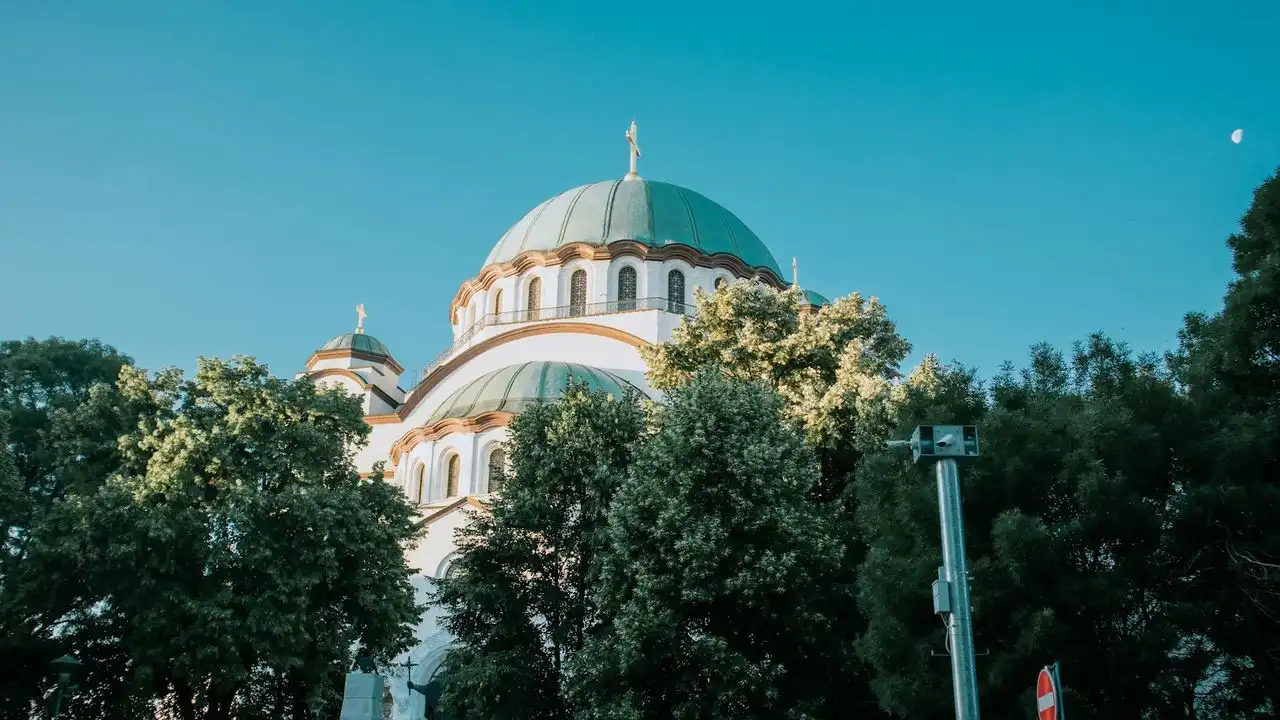
Serbian is a beautiful language that opens up an entirely new world in Southeast Europe.
Many people overlook it in favor of larger European languages.
However, dedicating time to Serbian offers unique advantages for travelers and language learners alike.
Knowing this language connects you directly with millions of native speakers.
In this guide, I’ll explain exactly why Serbian is highly rewarding and worth your time.
Table of contents:
It opens up the entire Balkan region
Serbian is a South Slavic language with significant mutual intelligibility across neighboring countries.
When you learn Serbian, you’re also practically learning Croatian, Bosnian, and Montenegrin.
These languages share the same grammatical foundation and most of their vocabulary.
This means your single language investment lets you communicate comfortably in four different countries.
You can travel from the flatlands of Vojvodina all the way to the Adriatic coast using the exact same language skills.
The spelling is perfectly phonetic
One of the biggest frustrations in language learning is unpredictable pronunciation.
English and French are famous for having silent letters and complex spelling rules.
Serbian follows a very strict phonetic rule created by linguist Vuk Karadžić.
The golden rule is simple: write as you speak and read as it’s written.
Every single letter represents one specific sound, and there are absolutely no silent letters.
Once you learn the alphabet, you can accurately pronounce any new word you see.
You get to use two alphabets
Serbian is unique because it uses both the Cyrillic and Latin alphabets interchangeably.
Both scripts have exactly 30 letters representing the exact same 30 sounds.
You’ll see Latin letters on modern billboards, menus, and websites.
You’ll see Cyrillic letters on official government documents and traditional street signs.
Learning both scripts gives your brain a great workout.
It also makes you highly adaptable when reading different types of texts in Serbia.
Here’s a quick look at how the letters perfectly match up across both alphabets:
| Latin letter | Cyrillic letter | Pronunciation |
|---|---|---|
| A a | А а | Like “a” in father |
| B b | Б б | Like “b” in boy |
| V v | В в | Like “v” in voice |
| G g | Г г | Like “g” in go |
| D d | Д д | Like “d” in dog |
It serves as a gateway to other Slavic languages
The Slavic language family is massive and includes Russian, Polish, Czech, and Bulgarian.
These languages all share similar grammatical concepts, like noun cases and verb aspects.
By learning Serbian, you build a strong foundation for understanding these complex grammar rules.
Serbian vocabulary shares many roots with Russian and other Eastern European languages.
If you decide to learn another Slavic language later, your Serbian knowledge will give you a massive head start.
The hospitality and culture are unmatched
Serbians are incredibly warm and welcoming to foreigners.
Locals will be absolutely thrilled if you speak even just a few words of their language.
Здраво, како си?
Одлично сам, хвала!
Speaking Serbian allows you to experience the authentic kafana culture.
A kafana is a traditional tavern where people gather to eat, drink, and listen to live music.
Knowing the language transforms you from a typical tourist into an honored guest.
It allows you to build deep, meaningful friendships with people who value personal connection over everything else.
Summary
Learning Serbian gives you access to multiple countries, a phonetic alphabet, and an incredibly rich culture.
It’s a highly rewarding language that will permanently change the way you experience Southeast Europe.
